A Midsummer Tempest in Coastal Rhode Island
On July 25, 1965, Freebody Park in Newport, Rhode Island, became the setting for one of the most consequential evenings in modern music. The Newport Folk Festival had cultivated an atmosphere of close listening, acoustic instruments, and shared tradition. Its audience arrived prepared for songs that could travel lightly across a wooden stage, carried by voice, guitar, banjo, or harmonica. Instead, during the festival”s final evening, Bob Dylan stepped forward with the Paul Butterfield Blues Band and connected his guitar to an amplification system.
The setting made the interruption feel especially vivid. Newport”s coastal air was already charged with the restless energy of a summer festival, and the park”s compact arrangement placed listeners unusually close to the stage. In that intimate environment, the sudden arrival of electric guitar, bass, drums, and amplified vocals was not a subtle adjustment in musical colour. It was a physical event. Visitors who had expected acoustic clarity encountered a dense, forceful sound that seemed to occupy every corner of the grounds.
The performance is often reduced to a symbolic argument about folk purity and artistic change. That interpretation is important, but incomplete. Dylan”s brief electric set also exposed the practical limitations of open-air concert production in the mid-1960s. It revealed how venue geometry, rudimentary public address equipment, performer monitoring, crowd expectations, and guest comfort were inseparable from the meaning of a performance. Newport did not simply witness a cultural dispute. It experienced a formative lesson in how sound staging and hospitality must develop together.
The Architecture and Acoustics of Freebody Park
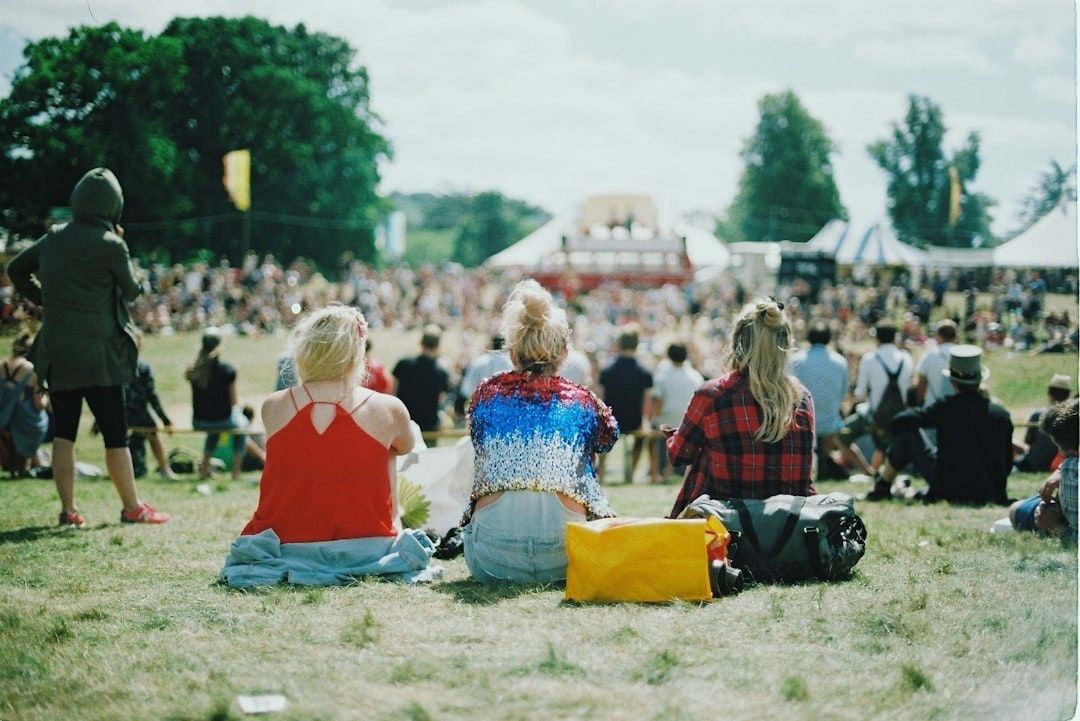
Freebody Park was not designed as a purpose-built modern festival venue. It was a municipal sports setting adapted for performance, with wooden bleachers, open grassy areas, and a stage arrangement intended to bring artists into direct contact with the audience. That informality suited the Newport Folk Festival”s established character. Rather than creating distance between performer and guest, the park concentrated attention around the stage and made the event feel communal, almost conversational.
Such intimacy had acoustic consequences. Wooden seating could reflect and colour sound, while grass absorbed some high frequencies and reduced the clean, predictable behaviour available inside a concert hall. The maritime environment added another variable. Humid coastal air can subtly affect the travel of high-frequency sound, and changing temperatures across an evening may alter the way instruments seem to carry. The result was not necessarily a dramatic echo, but a less controlled sonic field in which direct sound, reflected sound, and audience noise competed for attention.
For acoustic performers, this arrangement could feel generous. A singer with a guitar could remain legible because the production system was built around a limited number of sources and a relatively modest volume. The same physical closeness became more challenging when a full electric band entered the picture. The park”s compact proportions concentrated the impact of the performance, leaving little space for sound to disperse before reaching listeners.
- Wooden bleachers reflected portions of the sound and contributed to a harder, more immediate acoustic character.
- Grassy audience areas softened some reflections but offered no architectural control over coverage or delay.
- Close sightlines created intimacy while also placing listeners near the direct output of stage amplifiers.
- Open-air exposure made wind, humidity, temperature, and crowd noise part of the listening experience.
From a hospitality perspective, the park”s appeal and its limitations were closely connected. Guests could see artists clearly and feel part of the occasion, but there were fewer acoustic buffers, comfort zones, or alternative listening positions than a contemporary festival would provide. Once high-output amplifiers were switched on, the entire audience shared the consequences at nearly the same moment.
Sound Production at the Dawn of Modern Concert Staging
The Newport system was configured primarily for vocal intelligibility and acoustic presentation, not for the layered demands of a rock or blues ensemble. In 1965, festival public address systems were developing rapidly, but they were still modest compared with the distributed line-array systems used at major events today. The production team had to manage a new relationship between stage amplification and front-of-house reinforcement, often without the refined monitoring, equalisation, system alignment, or low-frequency control now considered standard.
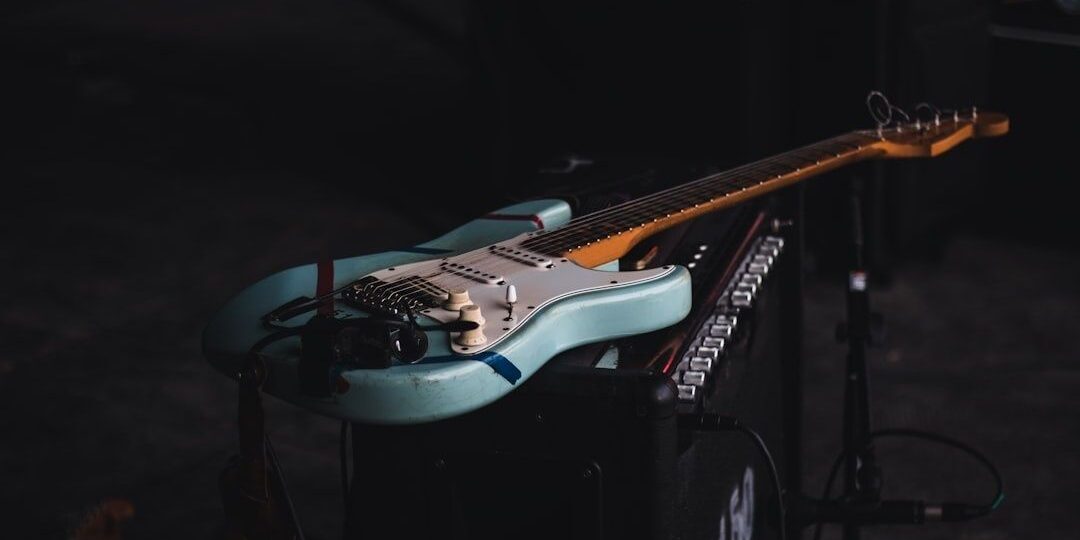
Dylan”s electric appearance placed Fender amplifiers and a rhythm section into a sonic environment that had not been prepared for them. Guitar amps generated their own considerable volume from the stage, while the PA had to carry vocals and other sources across an open audience area. If the vocal channels were driven too hard, the result could become harsh or distorted. If they were kept conservative, the instruments could dominate. The balance was difficult, particularly when performers were working with limited monitoring and an audience reacting audibly in real time.
The Paul Butterfield Blues Band brought a different physical vocabulary to Newport. Electric guitar, bass, drums, and amplified harmonica produce stronger transient attacks and more substantial low-frequency energy than a small acoustic ensemble. To listeners accustomed to a transparent vocal and string texture, the arrival of kick drum, bass cabinet, and overdriven guitar could feel less like a new arrangement and more like a sudden change in the building material of the event.
Modern festival engineers would approach the same challenge through system design, prediction software, delay coverage, dedicated subwoofers, digital consoles, in-ear or wedge monitoring, and carefully managed sound limits. The contrast helps explain why the Newport set could become so confusing. The problem was not simply that the music was louder. It was that the production architecture did not yet offer enough control over separation, coverage, or audience comfort.
| Production concern | Newport in 1965 | Contemporary festival practice |
|---|---|---|
| Audience coverage | Primarily concentrated around a relatively simple PA arrangement | Distributed systems designed for consistent coverage across multiple zones |
| Low-frequency control | Limited dedicated management of bass and kick drum energy | Dedicated subwoofer arrays, alignment, and frequency management |
| Performer monitoring | Basic stage monitoring, with greater dependence on amplifier sound | Advanced wedges, sidefills, digital control, or in-ear monitoring |
| Mix clarity | Greater risk of vocal strain, overload, and instrument masking | Detailed equalisation, compression, system tuning, and scene management |
| Guest comfort | Few acoustic refuge areas or graduated listening positions | Sound zoning, quieter hospitality areas, accessible viewing options, and published limits |
These technical conditions also shaped the stories that grew around the performance. A distorted or indistinct vocal mix could make an artistic decision appear more deliberately antagonistic than it was. Audience members who could not clearly hear the words were left primarily with the physical force of the sound. In that setting, confusion readily became interpretation, and interpretation became legend.
Dissecting the Audience Reaction Through Sound Psychology
The booing at Newport cannot be attributed to one cause. Some listeners objected on ideological grounds, believing that the festival represented a particular acoustic and political tradition. Others were responding to the abruptness of the transition, the brevity of the set, or the feeling that an expected exchange between artist and audience had been interrupted. The unfamiliar sound itself mattered. A listener may welcome musical experimentation in principle while still finding an unexpected volume and tonal density uncomfortable in practice.
Low frequencies are experienced bodily as well as heard. Bass guitar and kick drum can create pressure in the chest and abdomen, while amplified guitar and harmonica introduce sharp upper-midrange energy that can feel piercing when the system is not smoothly balanced. In a compact outdoor setting, these sensations can spread quickly through a crowd. Guests who had been listening with quiet concentration suddenly had to process a much more aggressive acoustic environment, often without advance warning or a comfortable way to reposition themselves.
The backstage tension has become part of the performance”s mythology, including stories involving festival organisers, fellow musicians, and Pete Seeger”s reported distress. The exact details have often been debated, and later recollections do not always agree. What remains clear is that Newport exposed a delicate social contract. Audience members expected the festival to provide not only music but also a recognisable manner of listening. Once the sound changed, the conventions of polite attention gave way to a visceral and highly public reaction.
- Ideological resistance came from listeners who associated folk music with acoustic instruments and communal tradition.
- Auditory discomfort arose from unfamiliar bass energy, amplified treble, and imperfect vocal separation.
- Short duration made the set feel incomplete, leaving little time for the audience to adjust.
- Limited spatial choice meant that guests could not easily find a quieter or more balanced listening position.
For event professionals, this episode offers a useful reminder. Guest reaction is shaped not only by programming but by preparation, expectation, and sensory transition. A change in sound can feel exciting when it is framed and supported. The same change can feel hostile when it arrives without warning, particularly in a setting where the audience has built a strong emotional relationship with the established format.
How Newport Rewrote the Playbook for Festival Hospitality
The Freebody Park era helped demonstrate that festival success depends on more than a compelling stage lineup. Sound staging, crowd movement, access control, seating, concessions, performer requirements, and audience expectations must be planned as one guest journey. Later Newport events increasingly reflected the need for more manageable sites and clearer operational boundaries. The move toward Fort Adams, a controlled harbour-side setting, offered advantages in entrance management, spatial organisation, and the creation of dedicated audience areas.
The history of Newport”s jazz festival illustrates this evolution. When the festival returned to Newport in 1981, it was redesigned as a smaller, family-oriented event at Fort Adams, with daytime programming, controlled entry, open grassy seating, and a prohibition on alcohol. Contemporary historical accounts, including the documented Newport Jazz Festival history, describe an attendance of about 8,000 that year. The reduced scale was not a failure of ambition. It was part of a deliberate effort to create a peaceful, well-paced experience after earlier disorder.
Modern organisers can translate those lessons into practical decisions that protect both artistic impact and guest comfort.
- Assess the site before booking the programme. Map sightlines, stage orientation, prevailing wind, reflective surfaces, neighbouring properties, emergency access, and the likely movement of sound beyond the audience boundary.
- Design coverage rather than simply increasing volume. A well-aligned distributed system can provide clarity across the site without forcing guests near the stage to absorb excessive levels.
- Create graduated listening environments. Provide a range of positions, including close-viewing areas, general audience space, quieter hospitality zones, accessible platforms, and clearly marked routes away from the loudest coverage.
- Prepare guests for meaningful changes. Programme notes, announcements, schedule design, and discreet wayfinding can help audiences understand when an acoustic set will give way to amplified performance.
- Coordinate sound, comfort, and operations. Place bars, food service, toilets, shade, seating, and information points so that guests can move without losing their sense of orientation or becoming trapped in the loudest areas.
- Monitor conditions throughout the event. Engineers and guest-services teams should track sound levels, weather, crowd density, complaints, and access routes, with authority to adjust the mix or flow when conditions change.
The best open-air venues now treat sound as part of hospitality rather than as an invisible technical layer. A memorable performance depends on emotional intensity, but it also depends on whether guests can hear clearly, move comfortably, find assistance, and remain confident about what will happen next. Fort Adams and similar harbour-side sites show how a historic setting can retain atmosphere while providing more disciplined control over arrival, circulation, and audience care.
Carrying the Echoes into the Modern Festival Era
Bob Dylan”s July 1965 performance remains powerful because it joined artistic rupture to practical revelation. The electric set challenged assumptions about what a folk festival could be, but it also revealed how quickly a venue”s physical and technical limits become visible when musical scale changes. Freebody Park offered intimacy, heritage, and a close relationship between artist and audience. It did not yet offer the production infrastructure required to make amplified performance feel effortless.
Today, sound production is a central part of event curation. The position of the stage, the shape of the audience field, the treatment of low frequencies, the availability of quieter spaces, and the quality of guest information all influence how a performance is received. Visitors exploring Newport”s musical history can appreciate the delicate balance between place and programme: the sea air, the historic grounds, the closeness of the crowd, and the technology that either supports or unsettles the experience. The enduring lesson is simple and valuable. Great festival hospitality does not soften powerful music. It gives that power a thoughtful setting in which every guest can experience it with clarity, comfort, and confidence.