The Art of Hospitality in Small Venue Production
An intimate venue can make a concert feel unusually immediate. In a room holding fewer than 500 people, a singer can read the front row, a drummer can feel the audience respond in real time, and a carefully shaped guitar tone can travel through the room without being lost in scale. These spaces are not simply smaller versions of arenas. They are close, responsive environments where atmosphere, technical preparation, and human welcome combine to shape the entire evening.
Technical riders can sometimes appear adversarial because they arrive as dense lists of requirements, while venue teams are working with limited budgets, compact stages, shared equipment, and several deadlines at once. Yet a rider is best understood as a hospitality document as much as a production document. It explains what allows visiting artists to work confidently. When venue managers respond with clarity, advance communication, and thoughtful alternatives, technical constraints become manageable. The result is a calmer load-in, a more comfortable soundcheck, and a performance in which the artist can concentrate on the audience rather than preventable problems.
Clean Power and Signal Architecture on Intimate Stages
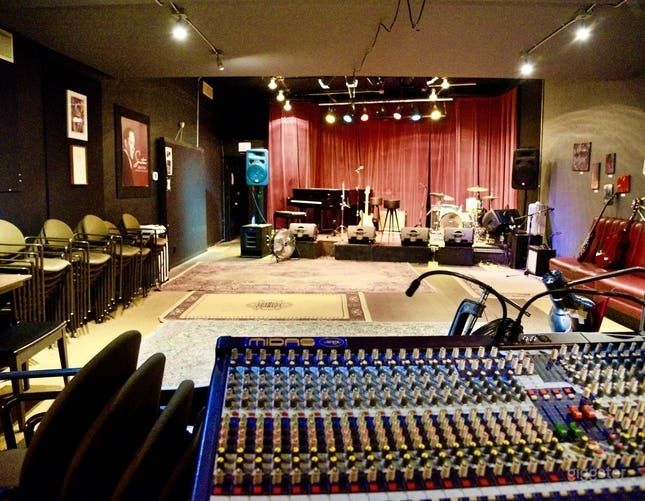
Reliable power is the quiet foundation of a well-run show. Audio systems should, wherever the building allows, be supplied from dedicated circuits that are separated from dimmers, LED fixtures, refrigeration, kitchen equipment, and other electrically noisy loads. Hum and buzz often begin with an apparently minor interaction between devices rather than a dramatic equipment failure. A venue electrician or production manager should know which outlets feed the audio system, label them clearly, and make that information available before the touring party arrives.
Small stages benefit from deliberate signal architecture. Drop boxes should be positioned where performers can reach them without crossing traffic routes, while stage snakes should follow the shortest safe path to the console or front-of-house position. Cable looms should be dressed, secured, and protected at points where performers, crew, or guests may pass. This is both a safety measure and an aesthetic one. A tidy stage looks calmer, allows instruments to be placed quickly, and preserves the visual character of an intimate room rather than allowing technical clutter to dominate it.
Direct injection boxes deserve particular care when acoustic instruments, keyboards, playback systems, or synthesizers form part of the programme. Reliable front ends, such as the J48 from Radial Engineering, are designed for live touring and professional recording, with active circuitry intended to preserve natural instrument reproduction while handling strong transients. The J48 operates from 48V phantom power rather than batteries and is specified to handle signals up to 9 volts, giving instruments useful headroom before distortion becomes a concern.
- Confirm which circuits are dedicated to audio and identify any shared loads before doors open.
- Place drop boxes and cable runs to support natural performer movement, not merely the shortest technical route.
- Keep spare DI boxes, short patch leads, adapters, and labelled replacement cables close to the stage.
- Check phantom power requirements and stereo-to-mono needs before the artist begins soundcheck.
Input Lists and Patch Management Without the Guesswork
An input list should give the house engineer and touring engineer a shared map of the show. It is more useful when it includes channel number, source, microphone or DI choice, stand requirement, phantom power status, monitor destination, and any special notes about polarity or processing. A list that simply states “guitar” or “keys” leaves too much room for interpretation. A clear schedule reduces questions during load-in and lets the venue identify shortages before the artist is standing on stage.
Compact rooms do not require enormous channel counts, but they do require disciplined allocation. The following examples are starting points rather than universal prescriptions. The artist”s advance information should always take priority, particularly when a touring engineer is carrying a prepared show file or when the ensemble uses unusual instruments.
| Typical setup | Suggested stage patch | Useful planning note |
|---|---|---|
| Acoustic solo act | Vocal microphone, acoustic guitar DI, spare vocal channel, playback or click return | Keep the vocal channel central and confirm whether the guitar needs a microphone, DI, or both |
| Acoustic trio | Lead vocal, supporting vocal, guitar DI, second instrument DI or microphone, kick or percussion input | Allow room for shared stands and confirm whether percussion is acoustic, electronic, or hybrid |
| Four-piece club band | Lead vocal, backing vocals, kick, snare, overhead, bass DI, guitar microphone, additional instrument inputs | Reserve spare channels for guest instruments, playback, or a second guitar sound |
The most effective workflow begins before the day of the show. A venue can send its stage plot, input list template, console details, monitor capabilities, patch position, and equipment inventory in one concise advance email. The artist or tour manager should return a current rider rather than relying on a generic document that may no longer reflect the production. Any substitution should be stated plainly, with a practical equivalent offered where possible. “The requested microphone is unavailable, but the venue can provide this alternative with similar tonal behaviour” is far more useful than silence followed by a hurried decision at load-in.
Cultivating Musical Comfort Through Mindful Monitor Mixes
Monitoring is where technical preparation becomes physical comfort for the performer. In a compact room, excessive wedge volume can spill into vocal microphones, acoustic guitar pickups, and drum microphones, reducing clarity in the house mix. The solution is not simply to turn everything down. Monitor placement, microphone direction, speaker angle, stage volume, and the performer”s position all influence feedback and intelligibility. A house engineer should ask what each musician genuinely needs to hear, then build mixes around those priorities rather than sending the entire band into every wedge.
Some visiting ensembles will arrive with in-ear monitors, while others will rely on traditional wedges. A welcoming venue should be prepared for both where its resources permit. For in-ear users, confirm available auxiliary outputs, connector types, stereo requirements, and whether the touring party carries its own transmitters or needs a wired solution. For wedge users, establish which monitors are available, whether they are on separate mixes, and where power and signal lines can be placed safely. If the venue cannot meet a request exactly, early notice allows the artist to bring the necessary equipment or adjust the arrangement without pressure.
The artist experience is shaped by this attention to detail, whether the room is a metropolitan club or a historic creative centre such as Stroud. Places with a strong local identity can feel immediately generous when the visiting act is given a clear arrival plan, a calm stage, and a monitor mix that supports confident performance. The town”s background and cultural character are part of the welcome, but the practical details matter just as much. Information about Stroud”s setting and history may help touring teams understand the destination, while thoughtful monitoring ensures they feel at home once the cases are opened.
- Ask each performer to identify the one or two sources that must remain intelligible in their mix.
- Position wedges for direct listening and minimise microphone spill before increasing level.
- Confirm in-ear monitor requirements, auxiliary outputs, cabling, and power during the advance.
- Build the first monitor mix conservatively, then make measured changes during line check and soundcheck.
- Check the stage from the performer”s position, not only from the mixing desk.
Hospitality Behind the Velvet Curtain
Technical riders describe equipment, but touring people also arrive with ordinary human needs. A reliable load-in meal, fresh drinking water, tea and coffee, a clean green room, secure personal storage, and a quiet place to change can have a meaningful effect on concentration and morale. Dietary information should be requested in advance, and food should be timed around the schedule rather than left to chance. A modest, clearly labelled meal served at the right moment is often more valuable than an elaborate spread that arrives after soundcheck.
Production managers can use a simple handoff checklist to keep the day orderly:
- Confirm arrival instructions, parking or unloading access, contact numbers, and the person responsible for meeting the tour.
- Prepare the stage, patch, monitor plan, green room, refreshments, and artist documentation before load-in begins.
- Review substitutions and unresolved technical questions with the touring representative on arrival.
- Set clear times for load-in, line check, soundcheck, doors, support performance, and changeovers.
- Assign one calm point of contact so artists do not have to repeat requests to several members of staff.
- Complete a final stage, cable, access, and backstage safety check before doors open.
Soundcheck should feel collaborative rather than punitive. A touring artist is not merely testing equipment, and a house engineer is not simply enforcing a venue”s limitations. Both are shaping the conditions for a shared public experience. Respectful language, unhurried explanations, and a willingness to solve one issue at a time can turn a potentially tense ritual into a reassuring part of the welcome. This approach reflects the wider values promoted by the National Independent Venue Association, which supports sustainable, equitable communities across independent live entertainment.
Setting the Stage for Remarkable Live Nights
A strong technical rider does not create distance between an artist and a venue. Used properly, it creates a common language. Clean power prevents avoidable noise, structured patching removes uncertainty, thoughtful monitoring protects musical confidence, and hospitable backstage planning allows the touring party to arrive, work, rest, and perform with dignity. In a small room, those details are especially visible because every part of the evening feels close to the audience.
Venue managers should request current riders early, document what can be supplied, and communicate alternatives without embarrassment or delay. Touring musicians should send accurate stage plots, realistic input lists, monitor requirements, dietary needs, and arrival information, then identify which requests are essential and which are preferences. When both sides prepare with generosity and precision, technical limitations become part of the creative conversation rather than a source of friction. The reward is a well-paced show in which the room feels effortless, the artist feels cared for, and the audience remembers the night for all the right reasons.